| OPERATING
SYSTEM _ INTRODUCTION |
 |
| Operating
system Functions |
An
operating system is a program that manages the computer
hardware. It also provides a basis for application
programs and acts as an intermediary between the computer
user and the computer hardware. Mainframe operating
systems are designed primarily to optimize utilization
of hardware. Personal Computer operating systems support
complex games, business applications, and everything
in between. Operating systems for handheld computers
are designed to provide an environment in which a
user can easily interface with the computer to execute
programs. Thus, some operating systems are designed
to be convenient, others to be efficient, and others
some combination of the two.
|
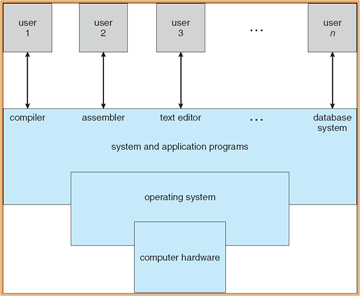
A computer system can be divided roughly into four components:
|
 |
The hardware |
|
The operating system |
|
The application programs |
|
The users |
|
The hardware – the
central processing unit (CPU), the memory, and the input/output
(I/O) devices – provides the basic computing resources
for the system.
The application programs – such as word processors,
spread sheets, compilers, and web browsers – define
the ways in which these resources are used to solve
users’ computing problems.
The operating system controls and coordinates the use
of the hardware among the various application programs
for various users. |
|
Abstract view
of the components of a computer system |
We
can also view a computer system as consisting of hardware,
software, and data. The operating system provides
the means for proper use of these resources in the
operation of the computer system.
An operating system is similar to a government. |
|
|







 Previous